
 Written by
 Why your Scientific Advisory Board can make or break your strategy
For any biotech or medtech company, whether you are preparing a clinical trial, seeking regulatory approval, entering a new market, or building credibility with investors, your Scientific Advisory Board (SAB) is one of your most strategic assets. The right board opens doors. It lends scientific credibility to your pipeline, connects you to the medical community, and helps you navigate the complex intersection of evidence, regulation, and clinical practice.
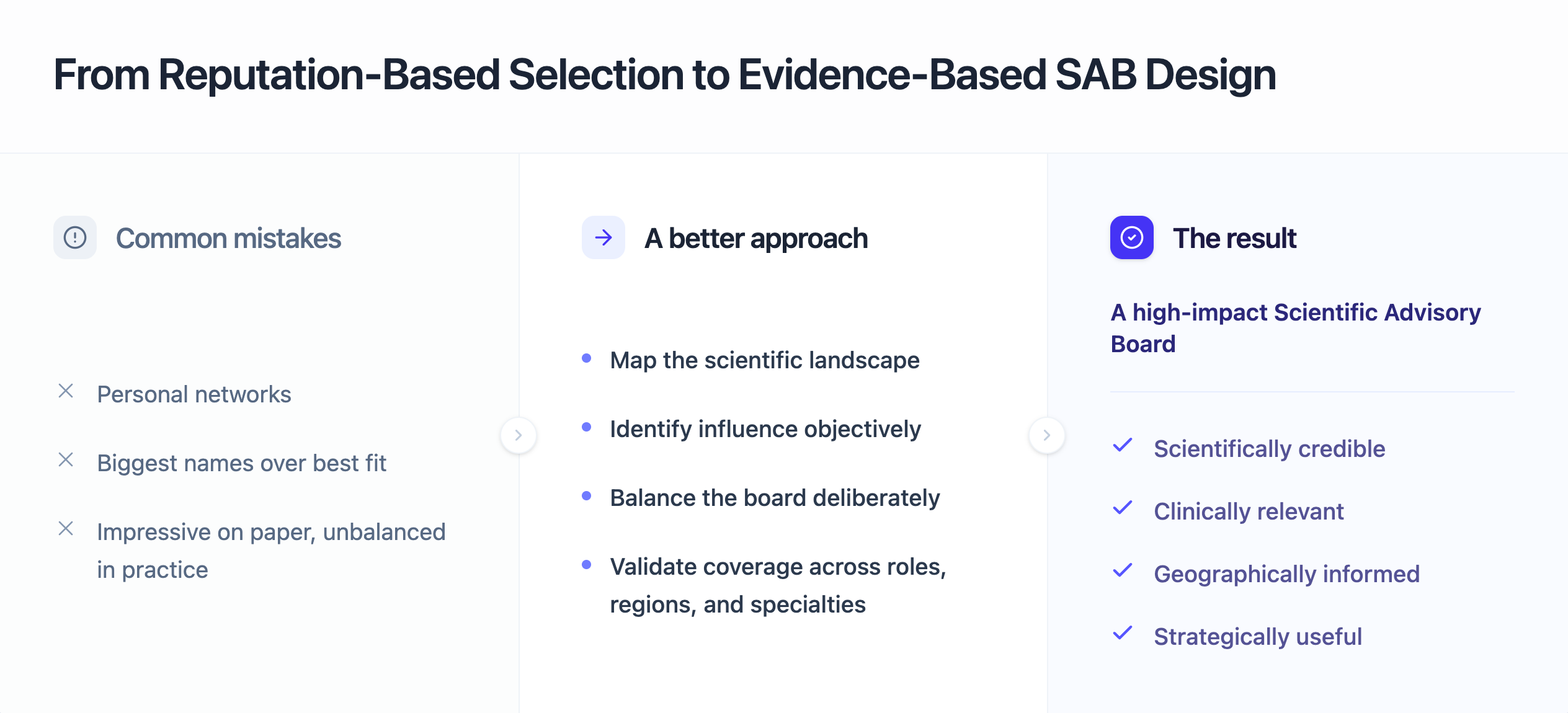
Yet many companies build their SABs the wrong way: relying on personal networks, chasing the biggest names regardless of fit, or assembling a group that looks impressive on paper but lacks the diversity and balance needed to be genuinely useful.
This post draws on our experience mapping KOL landscapes across therapeutic areas and regions, from sleep apnea in Sweden to diabetes and glucose monitoring in Australia. It offers a practical framework for building a SAB that really works.
1. Start with a map, not a list
The most common mistake is starting with names. Before you recruit a single person, you need a map of your scientific landscape.
What does that mean in practice? It means understanding:
1. Who are the most scientifically influential experts in your field? Measure this objectively, not by reputation alone. Look at publication output, citation impact, clinical trial activity, and network centrality. Tools like ScienceLeadR’s Scientific Leadership Index (SLI) make this quantifiable.
2. Where is the science being made? Which institutions, hospitals, and research networks are generating the evidence that will shape guidelines and clinical practice in your target markets?
3. Who holds institutional power? Who sits on guideline committees, regulatory task forces, professional society boards, and national health technology assessment bodies?
4. Who shapes clinical practice on the ground? The professor who publishes in top journals matters, but so does the clinician running the largest sleep lab in a country, or the GP who trains 200 colleagues a year.
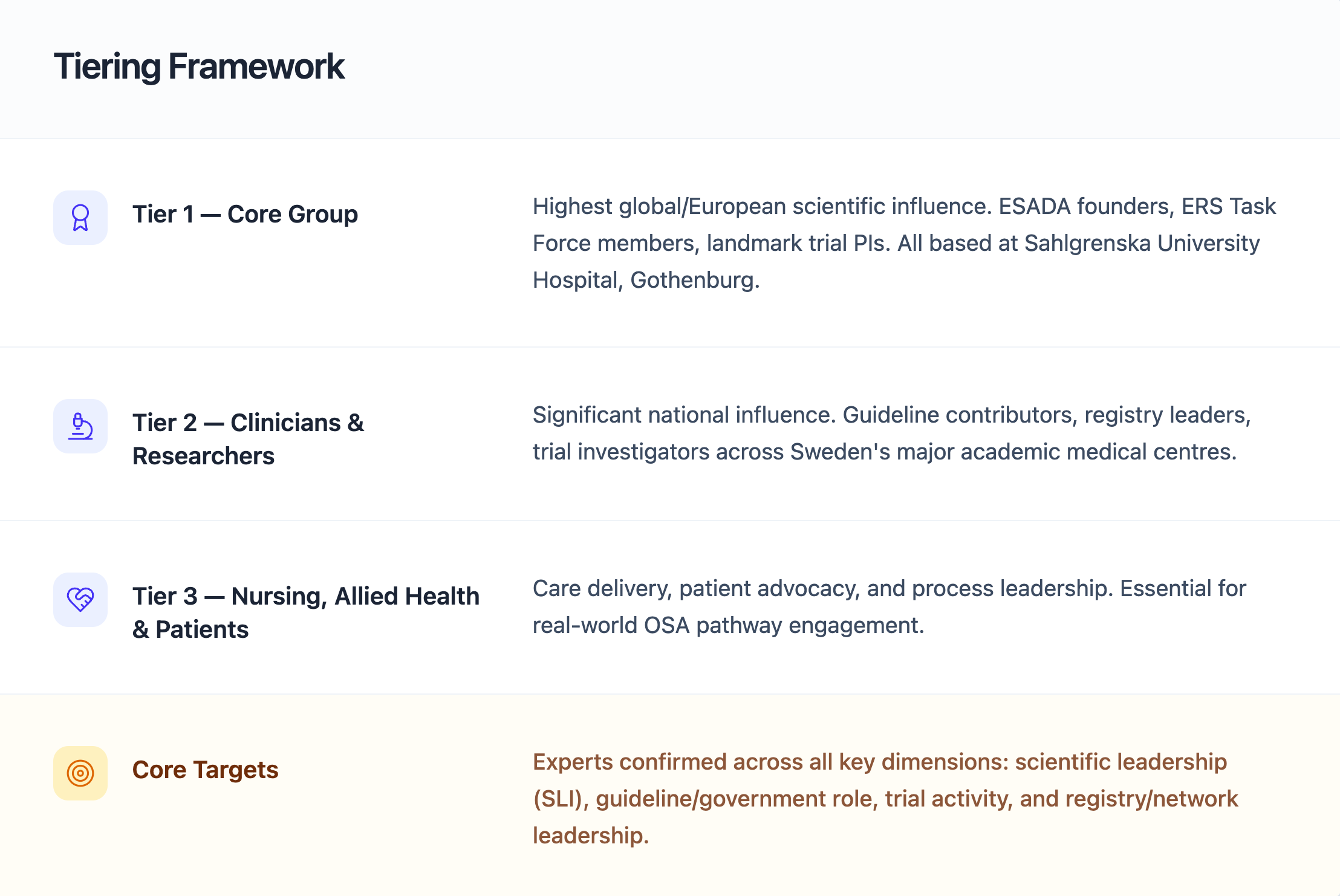
In a recent project on sleep apnea (OSA) in Sweden, we identified that the entire global infrastructure of European sleep apnea research is anchored at a single institution, Sahlgrenska University Hospital in Gothenburg, through ESADA, the European Sleep Apnoea Database. Three experts there hold disproportionate influence over the European scientific agenda. Any SAB for a company operating in this space that ignores this concentration would be flying blind.
The map comes first. The names follow from the map.
2. Balance researchers and clinicians
One of the most important and most neglected dimensions of SAB design is the balance between pure researchers and practising clinicians who are familiar with patients’ pathways.
Researchers bring scientific depth. They publish, run trials, sit on guideline committees, and present at congresses. They give your SAB academic credibility and can help you design rigorous studies. A researcher with a high publication record and strong citation impact signals to the scientific community and to regulators that your advisory board has genuine intellectual weight.
Clinicians bring something different: real-world perspective. They know what happens at the bedside, what patients actually experience, what barriers exist to diagnosis and treatment, and what the realities of care delivery look like in different healthcare systems. A pulmonologist running a regional sleep clinic in northern Sweden sees things that a Gothenburg professor does not.
The ideal SAB includes both, and ideally people who bridge the two worlds: the clinician-researcher who publishes actively while maintaining a full patient practice. In our OSA Sweden mapping, experts like Karl Franklin at Umeå (19 clinical trials, active clinical practice) or Eva Lindberg at Uppsala (epidemiology research combined with registry leadership) exemplify this profile.
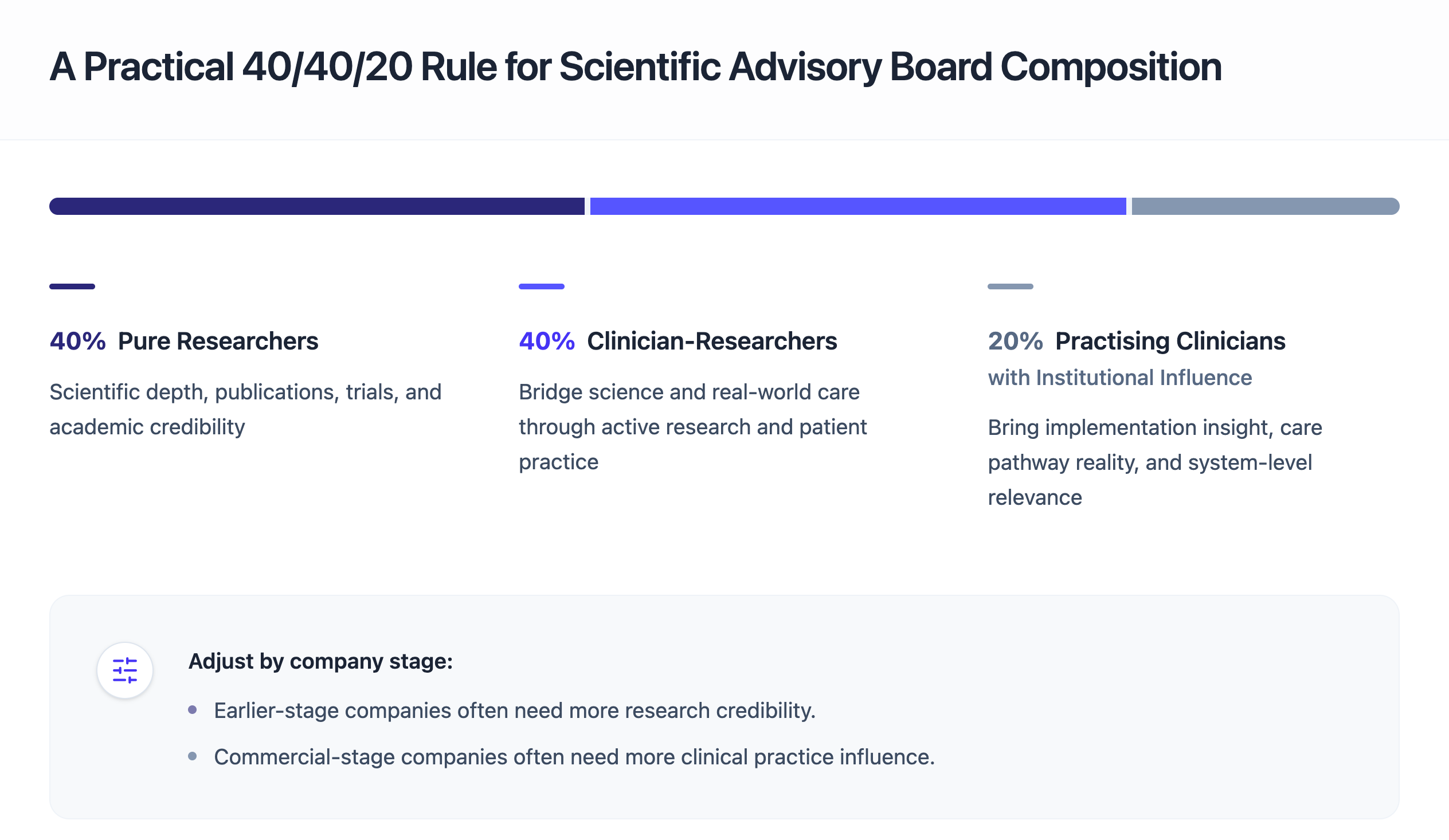
A practical rule of thumb: aim for roughly 40% pure researchers, 40% clinician-researchers, and 20% practising clinicians with strong institutional influence. Adjust based on your stage. Early-stage companies need more research credibility; commercial-stage companies need more clinical practice influence.
3. Build geographic diversity deliberately
Scientific influence does not distribute evenly across a country. In Australia, diabetes research is concentrated in Melbourne, Sydney, and Adelaide. In Sweden, OSA research is concentrated in Gothenburg, with secondary hubs in Uppsala, Umeå, Linköping, and Stockholm.
A SAB that only reflects the dominant hub will be blind to regional variation in clinical practice, local guideline adoption, reimbursement decisions, and patient access patterns. Healthcare systems are national, but care is delivered regionally, and the person who influences a regional hospital network may matter more to your commercial success than the national KOL who rarely sees patients.
When building geographic diversity, think in terms of:
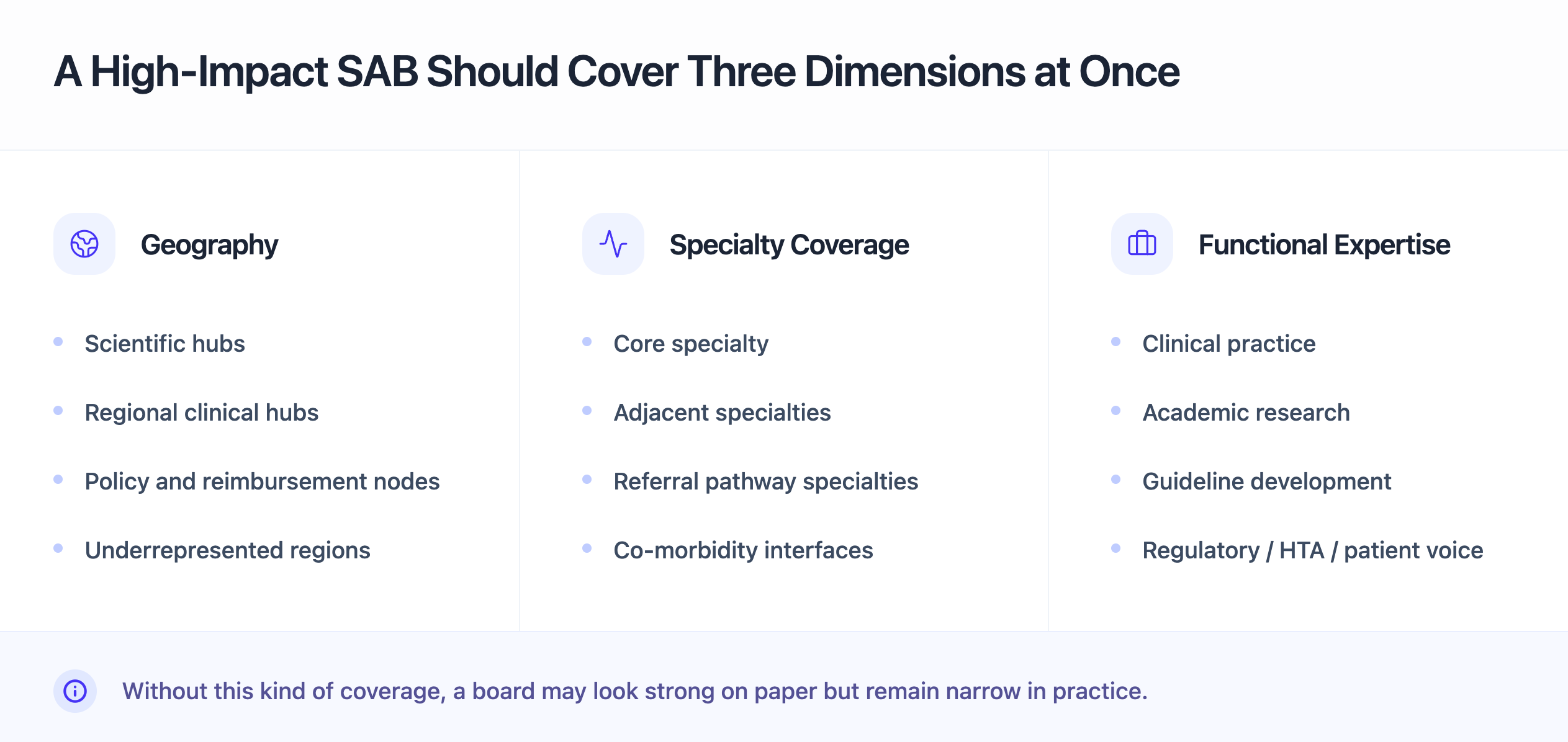
- Scientific hubs: the institutions producing the most research (essential for credibility)
- Regional clinical hubs: the hospitals or networks managing the largest patient volumes
- Regulatory and policy nodes: the cities or institutions where national guidelines and reimbursement decisions are made
- Underrepresented regions: geographies where your product needs to penetrate but where you currently have no relationships
For international companies, geographic diversity also means thinking across borders. The ERS Task Force on sleep apnea involves experts from Sweden, France, Ireland, Greece, and Germany simultaneously, and a position paper from that group carries weight across all of European medicine. Understanding which Swedish experts sit on those transnational bodies is as important as understanding the Swedish national landscape.
4. Cover the full spectrum of specialties
Sleep apnea is not just a pulmonology problem. It involves cardiologists (because of cardiovascular risk), neurophysiologists (because of sleep staging and diagnostics), ENT surgeons (because of upper airway surgery), psychologists (because of CBT for insomnia and CPAP adherence), dentists (because of mandibular advancement devices), and GPs (because most patients are first diagnosed in primary care).
Diabetes is not just an endocrinology problem. It involves diabetologists, cardiologists, nephrologists, ophthalmologists, nurses, dietitians, and increasingly digital health specialists.
A SAB that reflects only the dominant specialty in your field will give you a narrow and potentially distorted view of how your product will actually be used, adopted, and evaluated.
When mapping specialties, think across three dimensions:
- Clinical specialties. The full range of specialists who touch your patient population, not just the obvious ones. In sleep apnea: pulmonologists, cardiologists, neurophysiologists, ENT surgeons, dentists, psychologists, GPs.
- Functional expertise. What kind of work do these experts do? Clinical practice, academic research, guideline development, regulatory affairs, health technology assessment, patient advocacy? You need representation across these functions, not just clinical specialties.
- Disease interface specialties. Experts who work at the intersection of your indication and adjacent conditions. In sleep apnea, this means experts in hypertension, atrial fibrillation, diabetes, and metabolic syndrome, because OSA rarely comes alone, and the evidence base increasingly spans these boundaries.
5. Mix the right types of expertise
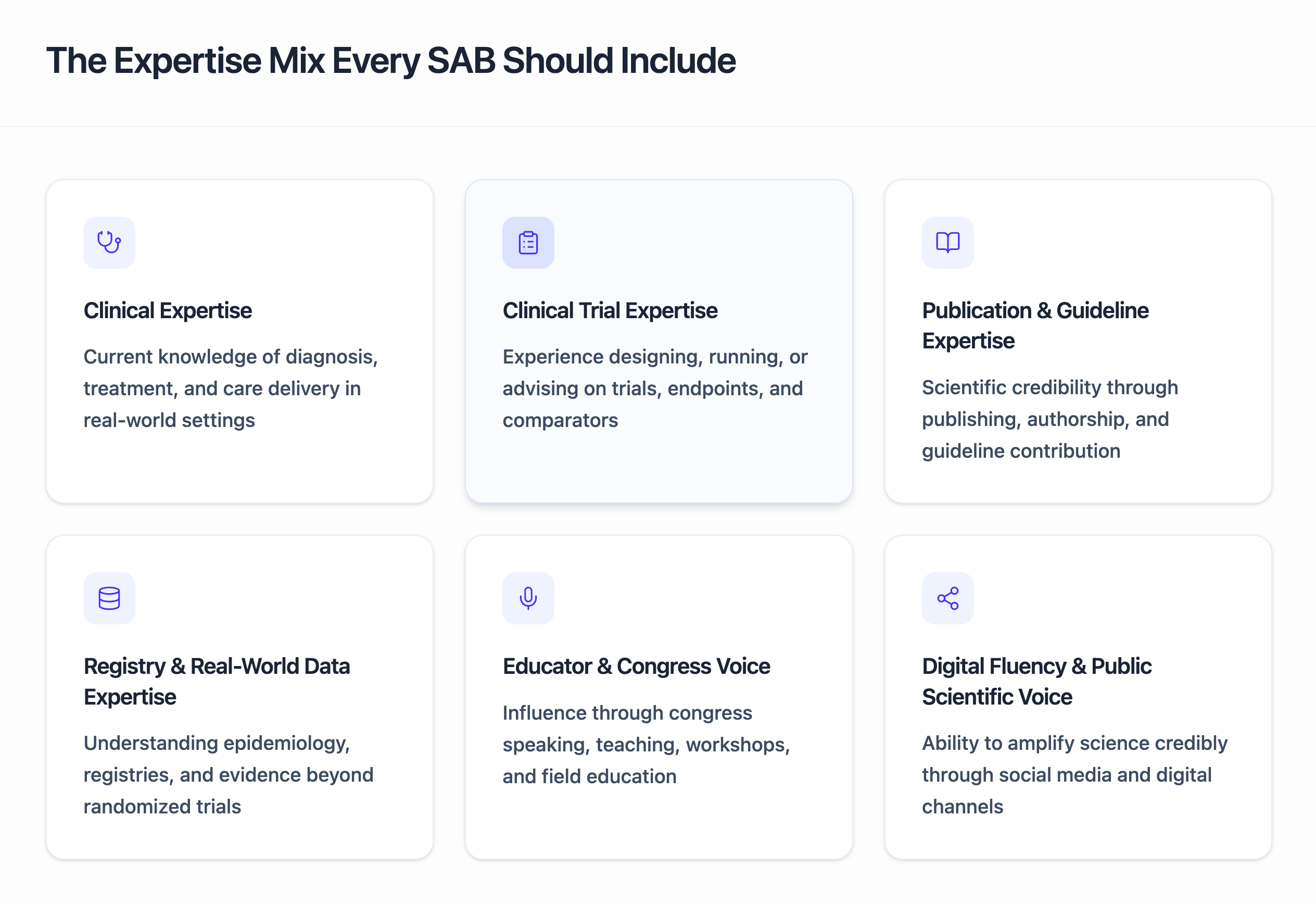
Beyond specialty, think carefully about the types of expertise your SAB needs to cover. Based on our mapping work, we recommend ensuring your board includes at minimum:
Clinical expertise. Experts with deep, current knowledge of how the disease is diagnosed and managed in real clinical settings. These members keep your SAB grounded in practice reality and can identify gaps between evidence and implementation.
Clinical trial expertise. Experts who have designed, run, or participated in clinical trials in your field. They can help you design your own studies, advise on endpoints and comparators, and give you credibility when you present your data to regulators and payers. Look for experts with a strong trial portfolio. In our Sweden OSA mapping, Karl Franklin (19 trials) and Jonas Spaak (14 trials) represent this profile.
Publication and guideline expertise. Experts who publish actively in high-impact journals and contribute to guideline development. Their scientific credibility transfers to your product. Look for experts with high citation counts, first and last authorship rates, and involvement in major systematic reviews, meta-analyses, and consensus statements. In the OSA space, Jan Hedner’s Lancet 2025 paper on sultiame is an example of the kind of publication that reshapes a field.
Registry and real-world data expertise. Experts embedded in national or international registries who understand the real-world epidemiology of your disease. These members are increasingly valuable as regulators and payers demand real-world evidence alongside RCT data. In Sweden, ESADA and SESAR are the critical OSA registries; in Australia, the National Diabetes Services Scheme plays this role.
The educator and congress voice. Scientific influence is not only measured in publications and trials. Some of the most strategically valuable SAB members are those who educate the field: invited speakers at international congresses, session chairs, workshop faculty. These experts shape how the next generation of practitioners thinks about a disease, a diagnostic approach, or a treatment category, often more powerfully than any single clinical trial.
A professor who delivers a plenary lecture at a major congress reaches hundreds of clinicians in a single afternoon. When they become associated with your company’s science, that reach becomes yours too. In our KOL mapping methodology, congress activity is tracked systematically: not just whether an expert has spoken, but how recently, at which meetings, in which role, and with what frequency. Look for at least one or two members with a strong and current congress presence, ideally at both national and international level.
One digitally fluent expert. Beyond clinical and research credentials, you need at least one member who is genuinely active on social media and understands how to use it strategically. A SAB member with a strong presence on LinkedIn, X (formerly Twitter), or Bluesky can amplify your scientific work, share trial updates, comment on publications, and give a credible human voice to your projects at moments that matter: a congress, a publication, a regulatory milestone.
In a world where scientific reputation is built as much online as in journals, an expert who can translate complex science into compelling public-facing content, and who has an engaged following of peers and clinicians, extends your reach far beyond what a press release ever could. This person does not need to be your most senior board member. Rising stars are often more digitally active and more influential online than established professors. What matters is that they are authentic, scientifically credible, and genuinely engaged with their community.
6. Balance career stages — KOLs and Rising Stars
A SAB composed exclusively of senior, established Key Opinion Leaders is a common and costly mistake. Prestige is not the same as impact, and a board of heavyweight professors, however distinguished, can become an echo chamber of established consensus rather than a source of fresh scientific thinking.
The most effective SABs deliberately mix career stages.
Established KOLs bring institutional weight, regulatory credibility, and deep networks. When Jan Hedner co-authors a paper in The Lancet or Josephine Forbes speaks at a national congress, the field listens. These experts can open doors, validate your approach to regulators and payers, and draw other experts to your board. Their names carry signal.
Rising stars, typically researchers in their mid-career, 10 to 20 years post-qualification, with a rapidly growing publication record and increasing trial activity, bring something different and equally valuable. They are often closer to the cutting edge of their field, more digitally fluent, more open to novel approaches, and more available than their senior counterparts. Importantly, they are the future KOLs: the people who will be writing guidelines and chairing task forces in five to ten years. Building a relationship with them now, before they become gatekeepers, is one of the highest-return investments a company can make.
In our KOL mapping methodology, ScienceLeadR tracks not just absolute SLI scores but SLI trajectory, specifically how fast an expert’s influence is growing relative to their career stage. A researcher with an SLI of 280 who has published 40 papers in the last three years and is leading their first multicentre trial may be a more strategically valuable SAB member than a senior professor with an SLI of 900 who publishes two papers a year and has stepped back from active trial work.
A practical approach: aim for roughly two-thirds of your SAB to be established experts and one-third to be rising stars. The ratio can shift depending on your needs. A company seeking regulatory credibility will lean toward established names; a company seeking scientific innovation will lean toward emerging voices.
7. Build a diverse scientific advisory board
Diversity is not a box to tick. It is a strategic imperative.
The evidence from research on decision-making and group cognition is clear: homogeneous groups are systematically less creative, less accurate in their assessments, and more prone to groupthink than diverse groups. A SAB that reflects only one gender, one institutional tradition, or one methodological approach will give you a narrower and less reliable view of your scientific landscape.
Gender diversity is the most visible dimension and, in many fields, the most persistently neglected. In sleep apnea, for example, OSA in women is historically under-diagnosed and under-researched, in part because the field has been dominated by research conducted predominantly on male populations by predominantly male researchers. A SAB with strong female representation, particularly experts who focus on gender differences in disease presentation and treatment response, will give you a scientific and commercial edge that a male-dominated board cannot.
In our Sweden OSA mapping, we sought to include female clinician-researchers whose work specifically addresses OSA in women, a population that is both under-served clinically and increasingly recognised as a distinct scientific priority.
Institutional and methodological diversity matters too. A SAB drawn entirely from two or three elite academic medical centres will reflect the scientific culture and methodological preferences of those institutions. Including experts from regional hospitals, primary care settings, or different national research traditions introduces perspectives that challenge assumptions and surface blind spots. In Australia, a SAB that only reflects the major Melbourne and Sydney hospitals will miss important variation in how diabetes is managed across rural and remote communities.
International diversity is particularly important for companies operating across multiple markets. The regulatory environment, clinical practice norms, reimbursement landscape, and patient culture vary significantly across countries.
Patient and lived experience representation is an emerging dimension that is rapidly becoming expected rather than optional. Regulators, payers, and professional societies increasingly require evidence of patient involvement in research and product development. Including a patient representative, or an expert with strong patient advocacy credentials, provides insight into the patient experience that no clinician, however empathetic, can fully substitute.
The practical checklist
Before finalising your SAB, run it through these questions:
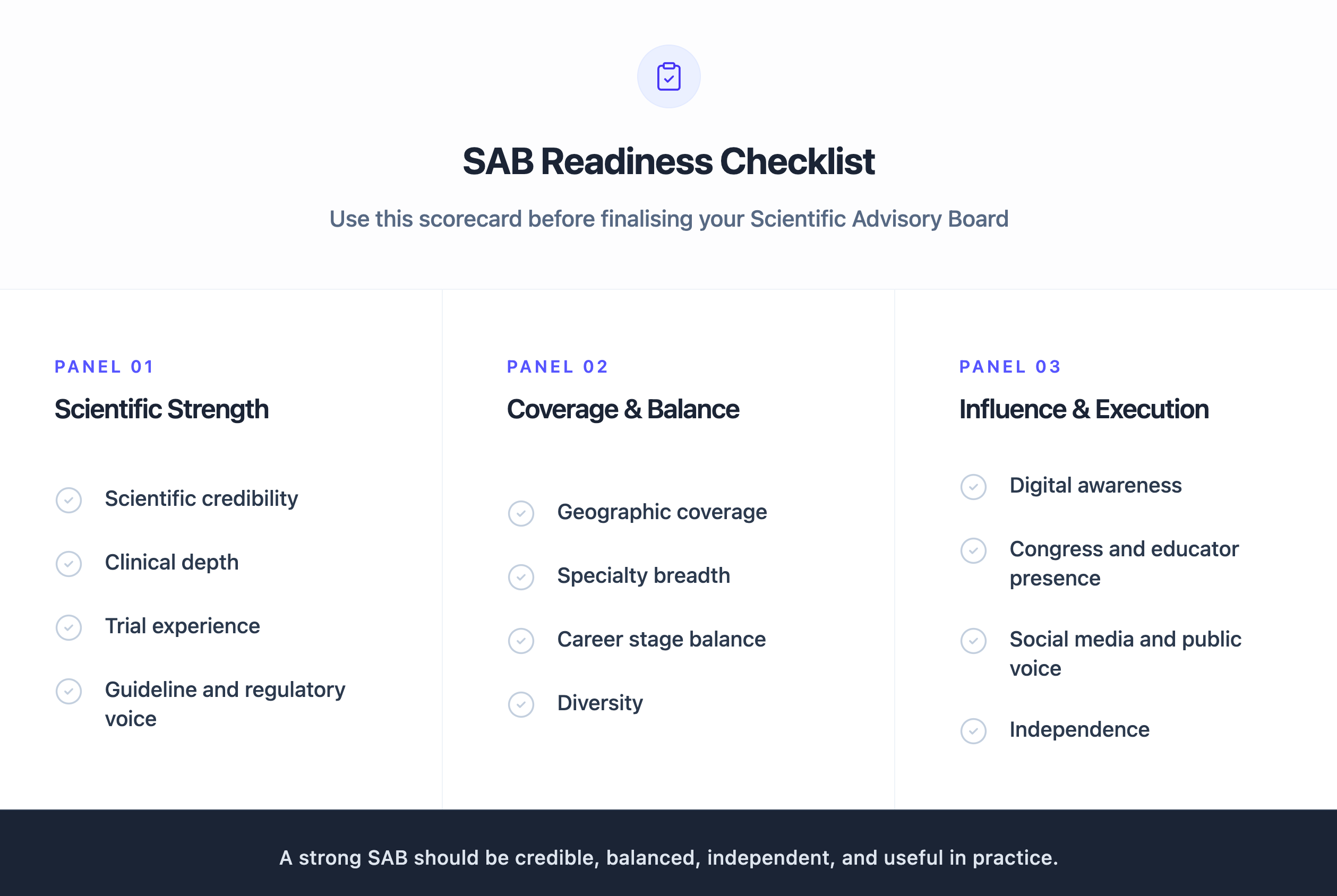
- Scientific credibility. Does the board include experts with objectively measurable scientific influence (publications, citations, SLI or equivalent)? Would a peer reviewer recognise these names?
- Clinical depth. Does the board include experts who see patients regularly and understand care delivery realities?
- Trial experience. Does the board include experts who have run or participated in clinical trials, ideally in your therapeutic area?
- Guideline and regulatory voice. Does the board include experts who sit on guideline committees, task forces, or advisory panels to national health authorities?
- Geographic coverage. Does the board represent both scientific hubs and regional clinical centres in your key markets?
- Specialty breadth. Does the board cover the full range of specialties involved in managing your target patient population, including adjacent specialties?
- Digital awareness. Does the board include at least one expert with fluency in digital health, telemedicine, or data-driven care?
- Congress and educator presence. Does the board include experts with a strong, current congress presence at both national and international level?
- Career stage balance. Does the board include both established KOLs and rising stars?
- Diversity. Does the board reflect gender balance, institutional diversity, and where relevant, patient community representation?
- Social media and public voice. Does the board include at least one member who is genuinely active and credible on professional social media?
- Independence. Are the members sufficiently independent from each other and from your company to provide genuine critical input?
Building the right SAB requires intelligence, not just networking. At ScienceLeadR, we combine scientific data (publication records, clinical trial activity, citation impact, network analysis) with external source validation (guidelines, registries, congress programmes, society affiliations) to map the full KOL landscape in any therapeutic area and geography.
Our three-step methodology, ScienceLeadR scoping, external sources analysis, and validation and finalization, produces a ranked, tiered view of your scientific landscape that tells you not just who the experts are, but what role each of them plays, how they connect to each other, and how they map onto the dimensions that matter for your SAB.
Beyond intelligence, we can also facilitate direct engagement: structured 1-to-1 expert interviews, verified introductions to the right experts at the right institutions, and targeted expert surveys through to fully facilitated scientific advisory board sessions.
The best SABs are not built from a list of famous names. They are built from a deep understanding of the scientific landscape and a deliberate strategy for how each member contributes to the whole.
ScienceLeadR provides KOL mapping, scientific intelligence, and expert engagement services for biotech, medtech, and pharmaceutical companies. Contact us to learn how we can help you build, assess or strengthen your Scientific Advisory Board.