
Dr Lauri Andress, PhD, MPH, J.D.
Public health — University of New Mexico, United States

Lauri Andress
LeadR Profile
Public health
Subspecialties:
Main Topics
Publications and Clinical Studies
Profile data updated on
Expert Rankings
Top experts on the MeSH terms this expert works on
Short Biography
Lauri Andress served as Associate Dean and Associate Professor(tenured) in the College of Population Health (COPH), University of New Mexico. After stepping down as Associate Dean she served as Assistant Dean for Access, Success, and Engagement, and Associate Professor also at the College of Population Health, University of New Mexico. Before joining COPH at University of New Mexico Dr. Andress served as Associate Dean for Inclusion, Diversity, and Community Engagement and Associate Professor in the Department of Medical Education at Geisinger Commonwealth School of Medicine (GCSOM).
She secured a Master of Public Health and Ph.D. in Community Health Science (University of Texas Health Sciences Center, majoring in health policy; concentration in Management and Policy Sciences), and a law degree from South Texas College of Law, Houston, Texas.
Connected to broader interests in the achievement of equity through structural and policy change, predicated on the social determinants of health (SDOH) as a policy agenda setting tool and framing device, her career has provided equity-oriented leadership, scholarship, and instruction in public health settings, community-driven initiatives, schools of medicine, and government and political settings. An important guiding vision for Dr. Andress’ efforts is to shift the way that society thinks about and conceptualizes notions of good and poor health, making room for the prioritization of non- medical factors framed around equity, mutual respect, and social justice.
Dr. Andress’ early career included work in public health governance and political settings. She led teams that launched the Centers for Health Equity in Wisconsin and Louisville, Kentucky. Through her experiences, she developed skills in strategic communication serving as Public Information Officer and Chief of Public Affairs in Houston’s Department of Health and Human Services. Later, she assumed the position of Policy and Communications aide in Washington D. C. for the 18th Congressional District of Texas.
While completing her doctorate she worked for one of the leading U.S. experts on population health, Dr. Alvin Tarlov, at the Texas Program for Society and Health at the Baker Institute for Public Policy, Rice University. As the Director of Operations & Strategic Political Action, her work focused on research, policy advocacy, and message framing around the SDOH with an emphasis on health equity from an international perspective- largely the United Kingdom and Canada. Dr. Andress manifests principles of equity through studies on food security, and maternal and infant health inequities, social exclusion and racism. She is a subject matter expert on the use of photovoice to highlight the voices and lived experiences of underrepresented groups. This has been an important part of her epistemology since working with Appalachian populations upon joining West Virginia University in 2013.
Her aim is to always build platforms for the voices, interests, and issues of the invisible so they can participate in the policy making process, communications, and agenda setting to address inequities. She incorporates a range of qualitative research skills including ethnographic techniques with content analysis of documents, and data collected from photos, community reflections, interviews, focus groups, print and electronic media, and videos. These photovoice projects have examined community redevelopment for low wealth neighborhoods, food insecurity, social justice, the invisibilization of Blacks in New Mexico, and food deserts, transportation and infant and maternal health issues of oppressed groups including Appalachian low-income and racialized women, families, the homeless, and the elderly see Home Page - Place & Health in West Virginia.
For work in New Mexico she developed a website under development: NM & Food Justice Narratives Additionally, one of the largest, multi-year, photovoice projects that Andress designed was “Imagining the West Side”, a photovoice exhibition that explored three ideas on how “place” shapes the health of the people that inhabit that space Pilot One: Community Voices & Lived Experiences - Place & Health in West Virginia
Organizations
Career arc: 2013 - 2026
Number : 18
Citations
Main journals
Best Journals
Breakdown by type
Click a legend label to hide or show it in the chart.
Latest Publications
5 most recent indexed articles
Source: Pubmed
| Title | Journal | Year | Citations |
|---|---|---|---|
| Scoping Conceptions of Equity: Reviewing a Decade of Physical Activity Research. environment, exercise, research, social justice | J Healthy Eat Act Living | 2023 | 0 |
| Authors' Response. dietetics, nutritional physiological phenomena | J Acad Nutr Diet | 2023 | 1 |
| From the national to the local: Issues of trust and a model for community-academic-engagement. public health, research, trust, social justice, pandemics, covid-19 vaccines | Front Public Health | 2023 | 11 |
| Healthy Community Design, Anti-displacement, and Equity Strategies in the USA: A Scoping Review. environment, displacement, psychological | J Urban Health | 2022 | 14 |
| Food Insecurity in the Rural United States: An Examination of Struggles and Coping Mechanisms to Feed a Family among Households with a Low-Income. income, meals, food insecurity | Nutrients | 2022 | 25 |
LeadR Networks
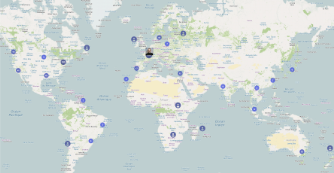
Main global connection map