
Alejandro A Schäffer
Genetics — National Cancer Institute (United States), United States

Alejandro A Schäffer
LeadR Profile
Genetics
Subspecialties: Oncology - Immunology
Main Topics
Publications and Clinical Studies
Short Biography
Alejandro Schäffer was born in Montevideo, Uruguay and emigrated with his parents to the United States. He received his B. S. in Applied Mathematics and his M.S. in Mathematics from Carnegie Mellon University in 1983. He received his PhD in Computer Science from Stanford University in 1988, focusing on algorithms and theoretical computer science. In 1992, he switched his research focus to software for genetics.He is best known for leading the development of the genetic linkage analysis package FASTLINK and for doing the implementation of the PSI-BLAST module of the sequence analysis package BLAST. The 1997 paper describing PSI-BLAST and other algorithmic improvements to BLAST is one of the 100 most cited scientific papers of all time. He has also carried out genomic data analysis as one member of large teams doing medical genetics studies, especially studies identifying genes that when mutated cause human primary immunodeficiencies. In 1999, Dr. Schäffer co-authored one of the first papers in tumor phylogenetics, now an active area of research in cancer genomics. Dr. Schäffer has been a Computer Scientist at the National Institutes of Health since 1996, first at the National Center for Human Genome Research which became the National Human Genome Research Institute during 1996-1998, second at the National Center for Biotechnology Information 1998-2018, and currently at the Cancer Data Science Laboratory in NCI which he joined on October 28, 2018. In the Cancer Data Science Laboratory, Dr. Schäffer applies his experience in algorithms, biological sequence analysis, genetic data analysis, and immunology to address research questions in cancer genomics and since 2021 he has also been working on large-scale analysis of cancer clinical trials.
Organizations
National Institutes of Health -
Number : 333
Citations
Main journals
Best Journals
Breakdown by type
LeadR Networks
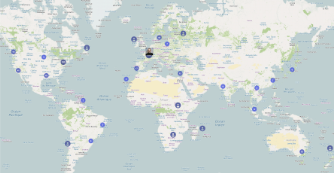
Main global connection map