
Angélica Rueda
Biochemistry — Center for Research and Advanced Studies of the National Polytechnic Institute, Mexico

Angélica Rueda
LeadR Profile
Biochemistry
Subspecialties:
Main Topics
Publications and Clinical Studies
Short Biography
Dr. Angélica Rueda has been a professor in the Department of Biochemistry at Cinvestav, Mexico, since 2008. She got her PhD in biochemistry studying calcium signaling and IP3 production induced by histamine receptors in urinary bladder myocytes, under the supervision of Dr. Agustin Guerrero. From 2002 to 2005, Dr. Rueda held an American Heart Association fellowship at Héctor Valdivia Laboratory (Department of Physiology, University of Wisconsin, School of Medicine, Madison, WI, USA), focusing her research on sorcin’s role in modulating cardiac and vascular ryanodine receptors. In 2006, she moved to Ana Maria Gómez and Jean Pierre Benitah Laboratory (at Inserm in Montpellier, France) to study calcium handling alterations in vascular smooth muscle cells from the diabetic db/db mouse. Dr. Rueda also took part in two different research projects: 1) calcium handling alterations in cardiomyocytes of a murine model of CPVT arrhythmia as a Fellow of Contica, and 2) participation of aldosterone and the mineralocorticoid receptor in cardiomyocyte calcium handling alterations. Dr. Rueda has 44 national and international publications, two book chapters, and she has mentored 12 students in the Master in Sciences program and 5 in the PhD program of the Department of Biochemistry (Cinvestav, Mexico). Dr. Rueda is a member of the National System of Researchers in México (SNII level 2). In 2010, Angelica Rueda received the Dr. Jorge Rosenkranz Prize from Roche Mexico, in the Young Investigator in Diabetes category, for her research on the functional alteration of cardiac ryanodine receptors in an experimental model of metabolic syndrome. In 2016, Dr. Rueda received a Fulbright Fellowship to conduct research at Dr. Héctor Valdivia’s laboratory (Center for Arrhythmia Research, Cardiovascular Center, University of Michigan-Ann Arbor) on ryanodine receptor alterations in a sorcin knockout murine model.
Dr. Angelica Rueda’s lab focuses on elucidating how metabolic alterations, such as those in metabolic syndrome, change the expression (at the gene and protein level) and in situ activity of the intracellular calcium channel/ryanodine receptor (RyR) in vascular (cerebral and mesenteric arteries) and cardiac (left ventricle cardiomyocytes) cells. Her laboratory employs molecular biology (real-time qPCR), biochemistry ([3H]-ryanodine binding and enzymatic activity assays), immunology (Western blotting and immunocytochemistry), and calcium imaging (confocal line-scan analysis) to analyze alterations in RyR expression, subcellular localization, and in situ activity.
Organizations
Center for Research and Advanced Studies of the National Polytechnic Institute -
Number : 46
Citations
Main journals
Best Journals
Breakdown by type
LeadR Networks
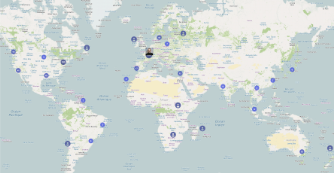
Main global connection map