

Dorothée G A Kasteleijn-Nolst Trenité
Dorothée G A Kasteleijn-Nolst Trenité, MD, PhD is an expert in Neurology at University Medical Center Utrecht (Netherlands). As of October 2026, ScienceLeadR ranks Dorothée G A Kasteleijn-Nolst Trenité in the top 1% of experts worldwide for Epilepsy. Dorothée G A Kasteleijn-Nolst Trenité has authored 125 publications, the most recent in 2026, and is an investigator in 3 clinical trials. SLR score: 425 (community average: 125). How the SLR is computed.
LeadR Profile
Neurology
Subspecialties: Pharmacy
Main Topics
Publications and Clinical Studies
Profile data updated on
Short Biography
Dorothée Kasteleijn has been extensively trained after obtaining her MD degree in Utrecht, the Netherlands in the field of epilepsy in very broad sense in the Dutch Epilepsy Centre SEIN. She has practiced for more than 30 years predominantly child- epileptology, but was also involved in adolescent and adult care. Colleagues Colin Binnie (UK), Jim Rowan (USA) and Jan Overweg (NL) trained her in video-EEG and the combination of pharmacology and EEG studies.
The first recognition of her clinical scientific work was the Young Physician’s award of the Gowers Price, September 1986, York, UK (Photosensitive patients: symptoms and signs during intermittent photic stimulation and their relation to seizures in daily life. J.Neurol.Neurosurg.Psychiat. 1987, 50:1546-1549).
She has done research on various topics of epilepsy (among which are neuropsychology, neuropharmacology and epidemiology), but most of all she is known for her work on reflex epilepsy and especially photosensitivity since the Gowers award and her thesis on this topic in 1989 (promotor: J. Willemse, child neurologist at Utrecht University). Because of her interest in epidemiology and health management, she got a postdoctoral degree in Public Health.
She founded a research department in the epilepsy center to strengthen collaboration with various universities and founded a national organization to stimulate collaboration between basic and clinical scientists ( SWO). She helped developing the successfulPhotosensitivity human model as proof of Concept for acceleration of anti-epileptic drug development and founded an epilepsy- specific national Ethical Committee. She earned therefore a degree in Clinical Pharmacology.
She has published more than 150 (59 as first and 49 as second or last author) peer reviewed articles and 50 book chapters and was editor of 4 supplements and two books. She is invited as keynote speaker all over the world.
She is very active in international collaboration and has (co-) organized many workshops, such as for the Nintendo videogame study group, founded an European Consortium on Photosensitivity Genetics and stimulated the development of EU guidelines on use of photic stimulation ( see ILAE website) and EU driving regulations.
She was co-editor of Epilepsy & behavior Case Reports and is on the editorial boards of Epilepsia and Epilepsy and Behavior and reviews regularly for all neurology related journals like Lancet Neurology, Brain, Neurology, J of Headache and Pain, Acta Neurologica Scandinavica, Clinical Neurophysiology, Brain and Development etc. as well as for general medical journals as New England Journal of Medicine, British Medical Journal and Lancet.
Within the FP6 EU research program, she was given a Marie Curie Excellence Chair position in Sapienza University, Rome, Italy (MEXC-CT-2005-24224: Visual Sensitivity) and continued working with the child neurologists on epilepsy, migraine and photosensitivity. Similarly she works in photosensitivity projects together with colleagues from the USA, Germany, France and the Netherlands to develop new anti-seizure drugs.
She stimulates and supports young colleagues on their “epilepsy- path” (ILAE mentoring Cie), helps patients worldwide with recognition and prevention of their photosensitivity. With support of the Epilepsy Foundations of America and the Netherlands she also tries to create awareness of this specific epilepsy phenomenon in the society at large. Apart from several articles in this field, one of her latest achievements is being the editor of the book “The Importance of Photosensitivity for Epilepsy”, Springer 2021 (https://link.springer.com/book/10.1007/978-3-319-05080-5?page=2#toc) with contributions of authors originating from 20 countries (47 centers) on 5 continents.
Organizations
Career arc: 1978 - 2026
Number : 125
Citations
Best Journals
Breakdown by type
Click a legend label to hide or show it in the chart.
Latest Publications
5 most recent indexed articles
Source: Pubmed
| Title | Journal | Year | Citations |
|---|---|---|---|
| Epilepsy surgery through a reproductive lifespan lens. PMID 42714400 — epilepsy, epilepsies, partial, reproductive health, precision medicine | Epilepsia | 2026 | 0 |
| Occipital spikes of the blind. PMID 42700149 — epilepsy | Epileptic Disord | 2026 | 0 |
| Response: Lenses protecting against photosensitivity violate international driving regulations. PMID 41773810 — epilepsy, lenses | Epilepsia | 2026 | 0 |
| Electroceuticals for Motherhood: Utility of responsive neurostimulation and Proactive antiseizure medication management in two pregnancies. PMID 41356385 — epilepsy, pregnancy, parenting, pharmaceutical preparations, seizures | Epilepsy Behav Rep | 2025 | 0 |
| Visually-provoked seizures: Consensus of the Epilepsy Foundation Working Group. PMID 41283196 — epilepsy, epilepsy, reflex, seizures, foundations, video games | Epilepsia | 2025 | 0 |
Clinical Studies 3
Synthesis
By phase:
By status:
By type:
By Monocentric/Multicentric:
Main Topics
Cohort/Consortium Investigators 2
LeadR Networks
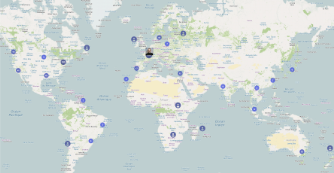
Main global connection map