

Jérôme Ruzzin
Jérôme Ruzzin is an expert in Endocrinology at University of Oslo (Norway). Jérôme Ruzzin has authored 33 publications, the most recent in 2026. SLR score: 122 (community average: 125). How the SLR is computed.
LeadR Profile
Endocrinology
Subspecialties:
Main Topics
Publications and Clinical Studies
Profile data updated on
Expert Rankings
Top experts on the MeSH terms this expert works on
Organizations
Career arc: 2005 - 2026
Number : 33
Citations
Main journals
Best Journals
Breakdown by type
Click a legend label to hide or show it in the chart.
Latest Publications
5 most recent indexed articles
Source: Pubmed
| Title | Journal | Year | Citations |
|---|---|---|---|
| Transcriptomic profiling of co-cultured cancer-host cells identifies hypoxia as a driver of the skeletal muscle cell's anti-proliferative effect on cancer cells. PMID 41654498 — cells, lung, muscles, breast neoplasms, neoplasms, neoplasm metastasis, breast, hypoxia, muscle, skeletal, muscle fibers, skeletal, environment | Oncogenesis | 2026 | 0 |
| Therapeutic potential of FGF19 in combatting osteosarcopenia: effects on muscle strength and bone health in aged male mice. PMID 41185883 — genes, muscles, aging, aged, muscle strength, cancellous bone, cortical bone, therapeutics, sarcopenia | JBMR Plus | 2025 | 0 |
| Persistent organic pollutants disrupt the oxidant/antioxidant balance of INS-1E pancreatic β-cells causing their physiological dysfunctions. PMID 38885551 — diabetes mellitus, cells, cysteine, insulin, peroxides, environmental pollutants, cell survival, persistent organic pollutants, oxidants, dichlorodiphenyl dichloroethylene, antioxidants, superoxides, xenobiotics, therapeutics, environmental health | Environ Int | 2024 | 2 |
| Mice lacking intestinal Nr1i2 have normal intestinal homeostasis under steady-state conditions and are not hypersensitive to inflammation under lipopolysaccharide treatment. PMID 37490003 — intestines, jejunum, homeostasis, pregnane x receptor, transcription factors, colon, ileum, duodenum, therapeutics, lipopolysaccharides | FASEB J | 2023 | 1 |
| Treatment with fibroblast growth factor 19 increases skeletal muscle fiber size, ameliorates metabolic perturbations and hepatic inflammation in 5/6 nephrectomized mice. PMID 37015932 — therapeutics, muscle, skeletal, genes, sarcopenia, muscle fibers, skeletal, fibroblasts, muscles, gene expression, fibroblast growth factors | Sci Rep | 2023 | 10 |
LeadR Networks
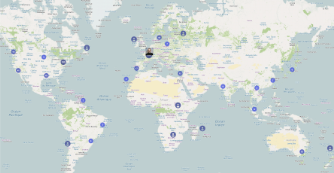
Main global connection map