Kathryn Lemery-Chalfant is an expert in Psychology at Arizona State University (United States). Kathryn Lemery-Chalfant has authored 154 publications, the most recent in 2026. SLR score: 670 (community average: 125). How the SLR is computed.

LeadR Profile
Kathryn Lemery-Chalfant Arizona State University United States
670 ScienceLeadR Reputation 670
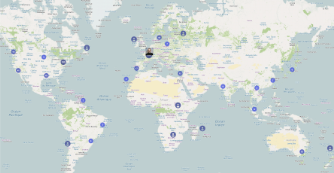
Network Map

Psychology

Subspecialties: Pediatrics - Psychiatry - Genetics

Full career – Last 3 years

Main Topics

Publications and Clinical Studies

Publications – Clinical Studies

Profile data updated on

Expert Rankings

Top experts on the MeSH terms this expert works on

Short Biography

I am an established senior scholar studying children’s social-emotional development, with >11,000 citations and an h-index >50 and

an i-10 index >125 (Google Scholar, 6/7/2026). My research is focused on how genes and environments work together to influence

risk and resilience for the development of mental and physical health problems. Based on our research across the past 25 years, it is

clear that children’s self-regulation defined across physiological, behavioral, and social levels of analysis is a key mechanism linking

genetic, family, and social contextual risk and resilience to the development of mental and physical health problems.

Organizations

Career arc: 1992 - 2026

Source: PubMed

Arizona State University

Publications Synthesis

Sources: PubMed, OpenAlex

Number : 154

Citations

Citations: 5 187 1st author: 10 Last author: 67 Unique author: 0


Best Journals

Breakdown by type

Click a legend label to hide or show it in the chart.

Latest Publications

5 most recent indexed articles

Source: Pubmed

Title Journal Year Citations
Genetic and contextual risks and developmental mechanisms underlying childhood aggression and young adult justice system involvement.
PMID 42773865 — psychopathology, human development, developmental disabilities, aggression, adolescent, genetic risk score
Dev Psychopathol20260
Etiology of Parental Knowledge, Youth Effortful Control, and Externalizing Behaviors: A Study of Evocative-Gene Environment Correlations.
PMID 42745670 — genes, disclosure, adolescent, sex, environment, adolescent psychiatry
J Adolesc20260
Stability of Self-compassion and its Relationship to Depressive Symptoms in Primary Caregivers of Twin Children: A Longitudinal Study.
PMID 42416096 — longitudinal studies, caregivers, stress, physiological, signs and symptoms, child
Mindfulness (N Y)20261
Neighborhood opportunity and child health: links to health behaviors and indicators in middle childhood.
PMID 42378491 — exercise, lung, health behavior, sleep, body composition, child health, psychology, child, sex, hand strength, child
J Pediatr Psychol20260
Heterogeneous Associations Between Objectively Measured Screen Time and Sleep in Early Adolescence.
PMID 42375129 — sleep, social media, actigraphy, adolescent
Technol Mind Behav20260

LeadR Networks

Main global connection map