
Nallasivam Palanisamy
Oncology — Henry Ford Health System, United States

Nallasivam Palanisamy
LeadR Profile
Oncology
Subspecialties: Urology - Genetics - Otolaryngology
Main Topics
Publications and Clinical Studies
Profile data updated on
Expert Rankings
Top experts on the MeSH terms this expert works on
Short Biography
My research program focuses on the discovery and translational characterization of recurrent gene fusions and molecular biomarkers in solid cancers, particularly prostate cancer. Over the past two decades, I have utilized genomic and transcriptomic technologies including aCGH, FISH, SKY, gene expression microarrays, RNA in situ hybridization, spatial transcriptomics, and next-generation sequencing (NGS) to interrogate the molecular architecture of cancer. My work has contributed to the identification of clinically relevant molecular subtypes and therapeutically actionable genomic alterations in solid tumors. I have authored 167 peer-reviewed publications, including lead and senior author articles in top-tier journals such as Nature, Science, Cell, Nature Medicine, Nature Communications, Science Translational Medicine, Blood, PNAS, and Nature Biotechnology. My research has been continuously focused on bridging basic genomic discoveries with translational biomarker development and clinical implementation in precision oncology.
I pioneered the application of transcriptome sequencing (RNA-seq) for the discovery of recurrent gene fusions in prostate cancer and identified recurrent RAF kinase family gene fusions in ETS-negative prostate cancer, melanoma, and gastric cancer (Palanisamy et al., Nat Med. 2010). This work established RAF kinase rearrangements as a novel class of therapeutically targetable aberrations in solid tumors and supported the concept that cancers can be classified based on molecular alterations rather than solely by histopathologic features. These findings also provided a rationale for targeted therapeutic approaches using BRAF and MEK inhibitors.
In subsequent studies, I investigated the role of noncoding RNAs and pseudogenes in prostate cancer biology. My laboratory identified prostate cancer-specific expression of pseudogenes and discovered a rare pseudogene-associated chimeric transcript, KLK4-KLKP1, demonstrating that noncoding genomic elements can contribute to oncogenic transcriptional programs (Cell, 2012). Functional characterization studies supported by NIH funding further demonstrated the oncogenic potential of these aberrations.
More recently, I developed multiplex molecular assays combining immunohistochemistry and RNA in situ hybridization for spatial characterization of prostate cancer biomarkers. Using these approaches, I identified previously unrecognized molecular subtypes of prostate cancer co-expressing ETS rearrangements and SPINK1, challenging the prevailing concept that these biomarkers are mutually exclusive. My current work also integrates spatial transcriptomics and whole-mount prostate tissue analysis to investigate intratumoral heterogeneity, tumor microenvironment interactions, and biomarker distribution across multifocal disease. In parallel, I am investigating extracellular vesicle- and urine-based biomarker platforms for noninvasive detection of prostate cancer molecular subtypes. Through ongoing collaborations with industry partners including Advanced Cell Diagnostics and Roche Ventana Medical Systems, my efforts are focused on translating multiplex RNA in situ hybridization and spatial biomarker assays into clinically applicable diagnostic platforms for comprehensive molecular characterization of prostate cancer and precision oncology applications.
Organizations
Career arc: 1991 - 2026
Number : 211
Citations
Main journals
Best Journals
Breakdown by type
Click a legend label to hide or show it in the chart.
Latest Publications
5 most recent indexed articles
Source: Pubmed
| Title | Journal | Year | Citations |
|---|---|---|---|
| DKC1 promotes colorectal cancer progression and therapy resistance by dysregulating sphingolipid biosynthesis. sphingolipids, genes, biological science disciplines, neoplasms, therapeutics, colorectal neoplasms | Nat Commun | 2026 | 0 |
| AAA ATPase TRIP13 is overexpressed in prostate cancer and promotes tumor progression. cells, genes, neoplasms, prostate, prostatic neoplasms, atpases associated with diverse cellular activities, therapeutics | Transl Oncol | 2026 | 0 |
| Mapping Molecular Diversity in Prostate Cancer With a Combined Multiplex IHC and RNA-ISH Assay. genes, neoplasms, prostate, biomarkers, gene fusion, prostatic neoplasms, tissues, rna | Prostate | 2025 | 0 |
| Smoking and the risk of prostate cancer: a review of risk and disease progression. life style, neoplasms, disease progression, prostate, prostatic neoplasms, risk factors, research, smoking | Genes Environ | 2025 | 1 |
| Exploring Latent Prostate Cancer: A Forensic Autopsy Study in South India. natural history, neoplasms, prostate, aged, prostatic neoplasms, prevalence, diagnosis, history, autopsy | Prostate | 2025 | 0 |
LeadR Networks
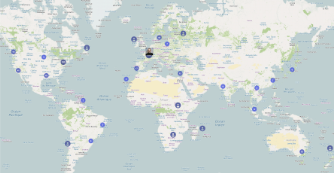
Main global connection map