

Nektarios Tavernarakis
Nektarios Tavernarakis is an expert in Biochemistry at University of Crete (Greece). Nektarios Tavernarakis has authored 299 publications, the most recent in 2026. SLR score: 1,286 (community average: 125). How the SLR is computed.
LeadR Profile
Biochemistry
Subspecialties: Geriatrics - Neurology - Informatics
Main Topics
Publications and Clinical Studies
Profile data updated on
Expert Rankings
Top experts on the MeSH terms this expert works on
Short Biography
Nektarios Tavernarakis is Professor of Molecular Systems Biology at the Medical School of the University of Crete, in Heraklion, Greece, and Distinguished Member of the Foundation for Research and Technology-Hellas (FORTH). He is also Research Director at the Institute of Molecular Biology and Biotechnology (IMBB) of FORTH, where he is heading the Neurogenetics and Ageing laboratory. He is currently serving as President of the European Molecular Biology Conference (EMBC). He has served as President of the Board of Directors of FORTH, President of the European Institute of Innovation and Technology (EIT) Governing Board, Vice President of the Scientific Council of the European Research Council (ERC), and Director of IMBB. He is also the Founder and first Director of the Graduate Program on BioInformatics at the University of Crete. He is a member of the American Association for the Advancement of Science (AAAS), the European Molecular Biology Organization (EMBO), the German National Academy of Sciences (Leopoldina), the European Academy of Sciences and Arts (EASA), Academia Europaea, the European Academy of Sciences (EurASc) and the Academy of Athens. His work focuses on the molecular mechanisms of ageing and neurodegeneration. He has received several notable scientific prizes, including two ERC Advanced Investigator Grants, and an innovation-supporting ERC Proof of Concept Grant. He is the recipient of the EMBO Young Investigator award, the Alexander von Humboldt Foundation, Friedrich Wilhelm Bessel research award, the Helmholtz International Fellow Award, and the Datta Medal of the Federation of European Biochemical Societies (FEBS). He has received the Doctor Honoris Causa distinction of the Ionian University Department of Informatics. He is also the recipient of the Scientific Prize for Medicine and Biology, and the Excellence in Biomedical Sciences Award, of the Bodossaki Foundation, which are two of the most competitive scientific distinctions for Greeks, in Greece and abroad. He is the only Greek scientist to have been awarded both these prestigious prizes. In addition, he has received the BioMedical Research Award of the Academy of Athens, the Galien Scientific Research Award, the Empeirikeion Foundation Academic Excellence Prize, the FORTH Research Excellence award, and the International Human Frontier in Science Program Organization (HFSPO) long-term Postdoctoral Fellowship.
Organizations
Career arc: 2010 - 2026
Number : 299
Citations
Main journals
Best Journals
Breakdown by type
Click a legend label to hide or show it in the chart.
Latest Publications
5 most recent indexed articles
Source: Pubmed
| Title | Journal | Year | Citations |
|---|---|---|---|
| A PPARγ-like signalling axis integrates lipid homeostasis and mitochondrial quality control to preserve neuronal integrity. PMID 42856519 — sphingolipids, quality control, lipid droplets, homeostasis, neuroprotection | bioRxiv | 2026 | 0 |
| Condensate-driven triglyceride reduction links α-synuclein to mitochondrial dysfunction. PMID 42811169 — parkinson disease, molecular biology, synucleins, triglycerides | EMBO Rep | 2026 | 0 |
| CYLD-mediated lysine63 deubiquitination regulates synaptic transmission and autophagy to mitigate age-related sequelae. PMID 42243117 — autophagy, biological science disciplines, work, synaptic transmission, deubiquitinating enzymes, cholinergic agents | Nat Commun | 2026 | 0 |
| The nuclear shredder behind PARPi resistance. PMID 42230925 — cell biology | Nat Cell Biol | 2026 | 0 |
| Niemann Pick Type C Presenting as Familial Late-Onset Richardson Syndrome. A Case Series of Four Siblings. PMID 41919582 — genes, supranuclear palsy, progressive, atrophy, brain, hearing, mesencephalon, signs and symptoms, niemann-pick diseases, siblings, diagnosis, hearing loss, mutation | Mov Disord Clin Pract | 2026 | 0 |
LeadR Networks
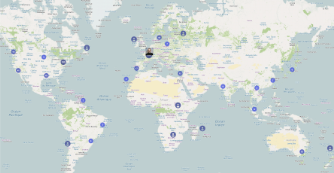
Main global connection map