Dr Paulo Adriano Schwingel, PhD, MSc

Sports medicine — Universidade de Pernambuco, Brazil

LeadR Profile

Dr Paulo Adriano Schwingel, PhD, MSc Universidade de Pernambuco Brazil
393 ScienceLeadR Reputation 393
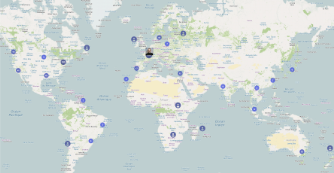
Network Map

Sports medicine

Subspecialties: Cardiology - Hematology - Rheumatology

Full career – Last 3 years

Main Topics

Publications and Clinical Studies

Publications – Clinical Studies

Profile data updated on

Short Biography

Associate Professor IV at the University of Pernambuco (UPE), Paulo Adriano Schwingel holds the title of Livre-Docente (Brazilian habilitation), with a Master's degree and a PhD in Medicine and Health from the Faculty of Medicine of Bahia (FMB), Federal University of Bahia (UFBA). He graduated in Physical Education from the School of Physical Education, Physiotherapy and Dance (ESEFID), Federal University of Rio Grande do Sul (UFRGS). He is a CNPq Research Productivity Fellow (Level B) and held a Pernambuco State Research Productivity Fellowship (BPP) from FACEPE in 2024-2025. His academic career is complemented by extensive experience in sport physiology applied to elite performance. He served as Physiologist for the Brazilian Paralympic Swimming Team at the Brazilian Paralympic Committee from 2009 to 2015, a period covering preparation for major international competitive cycles, and continues to provide specialized scientific support to Olympic and Paralympic athletes, racing drivers, and martial artists. At UPE, he is Decano (Head) of the Nutrition Program Board at the Petrolina Campus and a faculty member in the Graduate Programs in Rehabilitation and Functional Performance (PPGRDF) at the Petrolina Campus and in Health Sciences (PPGCS) at the Santo Amaro Campus in Recife. At the Petrolina Campus, he leads the Human Performance Research Group (GPEDH) and the Human Performance Research Laboratory (LAPEDH), where he supervises master's and doctoral students in the research line Assessment and Intervention in the Cardiorespiratory, Vascular and Metabolic Systems. At the Santo Amaro Campus, he supervises graduate students in the line ''Quality of Life, Diagnosis, Treatment and Development of Health Technologies''. His research addresses the physiological, biochemical, and morphological mechanisms underlying human performance and the molecular and functional processes involved in maintaining health. Since 2024, he has worked on artificial intelligence (AI) applied to health, focusing on the validation of tools derived from open-weight Large Language Models (LLMs), run entirely on local institutional infrastructure, for the differential diagnosis of Brazilian endemic diseases - a line oriented toward sovereignty over sensitive health data and toward feasible adoption by the Brazilian Unified Health System (SUS). The aim is to improve clinical diagnosis and to validate the accuracy of these methods, offering AI-based support to health professionals across disciplines. He has supervised or co-supervised 18 doctoral theses, 19 master's dissertations, and 50 undergraduate research projects. He serves as a reviewer and as an editor for international scientific journals, including Artificial Intelligence in Health. Contact: paulo.schwingel@upe.br. Social media: @drpauloadriano.

Organizations

Career arc: 2010 - 2026

Source: PubMed

Universidade de Pernambuco

could not re-read experiences after save", error); return null; } if (persistedEntries === null) { return null; } if (persistedEntries.length === 0 && sent.some((entry) => entry.isvisible !== false)) { console.warn(" re-read after save came back empty, keeping the edited entries"); return null; } this.state.current.experience = persistedEntries; const expected = this.yearsSignature(sent); const received = this.yearsSignature(persistedEntries.map((entry) => ({ isvisible: entry.isvisible, topresent: entry.topresent, year_start: entry.startperiod, year_stop: entry.endperiod }))); if (expected !== received) { console.error(" saved experiences were not persisted as sent", { sent: expected, received: received }); return false; } return true; }, async fetchExperiences() { const response = await $.ajax({ url: ajaxLoadUserData, type: "POST", data: { security: ajaxDataLoadUserData.security, data_to_load: "OrganizationHisto", } }); const parsedData = JSON.parse(response); if (parsedData.loaded === false || !parsedData.user_data || !Array.isArray(parsedData.user_data)) { return null; } return parsedData.user_data.map((value, index) => ({ company: value["name"], url: "", position: (value.hasOwnProperty("position") ? ( value["position"] ) : ( "" ) ), startperiod: value["year_start"], endperiod: value["year_stop"], topresent: (value.hasOwnProperty("topresent") ? ( value["topresent"] ) : ( false ) ), orgid: value["orgid"], isvisible: (value.hasOwnProperty("isvisible") ? ( value["isvisible"] ) : ( true ) ), description: "", tags: [], isOpen: false, ismain: (value.hasOwnProperty("ismain") ? ( value["ismain"] ) : ( (index === 0) ? true : false ) ) })); }, async loadDataOnMount() { this.loading = true; try { const experiences = await this.fetchExperiences(); this.loadFailed = experiences === null; if (experiences !== null) { this.state.current.experience = experiences; } } catch (error) { console.warn(" could not load experiences", error); this.loadFailed = true; } this.loading = false; } }, computed: { experience: { get() { return this.state.current.experience }, }, }, async mounted() { await this.loadDataOnMount() }, } }; })

Publications Synthesis

Sources: PubMed, OpenAlex

Number : 139

Citations

Citations: 763 1st author: 7 Last author: 57 Unique author: 0


Best Journals

Breakdown by type

Click a legend label to hide or show it in the chart.

Latest Publications

5 most recent indexed articles

Source: Pubmed

Title Journal Year Citations
Diaphragmatic Thickness as a Marker of Systemic Muscle Depletion in Non-Ambulatory Children with Cerebral Palsy: Implications for Integrated Neurorehabilitation Assessment.
muscles, ultrasonography, neurological rehabilitation, nutritional status, paralysis, cerebral palsy, child
NeuroSci20260
Perceived Exertion Is Associated with Cardiovascular Strain but Not Glycemic Response to Gym-Based Exercise in Adults with Type 1 Diabetes: An Exploratory Randomized Crossover Trial.
diabetes mellitus, exercise, environmental exposure, blood glucose, fitness centers, heart rate, heart, prescriptions, physical exertion, diabetes mellitus, type 1
Int J Environ Res Public Health20260
Effects of Exercise Order of Combined Power and Endurance Training on Arterial Stiffness and Hemodynamic Parameters in Previously Trained Hypertensive Older Adults.
exercise, hypertension, endurance training, hemodynamics
Can Geriatr J20260
Gender-Attributed Persona Prompts and the Diagnostic Accuracy of Proprietary and Open-Weight Large Language Models in Chagas Disease and Visceral Leishmaniasis: A Paired Experimental Study.
diagnosis, differential, language, leishmaniasis, leishmaniasis, visceral, neglected diseases, chagas disease
Healthcare (Basel)20260
Prognostic Value of Cardiac Strain in Cognitive Impairment: A Systematic Review.
cognitive dysfunction, cognition disorders, echocardiography
Med Sci (Basel)20260

LeadR Networks

Main global connection map