
Peter Schirmacher
Oncology — University Hospital Heidelberg, Germany

Peter Schirmacher
LeadR Profile
Oncology
Subspecialties: Gastroenterology - Hepatology
Main Topics
Publications and Clinical Studies
Profile data updated on
Expert Rankings
Top experts on the MeSH terms this expert works on
Short Biography
Academic Education and scientific Degrees
1996 Habilitation (Pathology), University of Mainz
1989-1991 PhD-Study (Molecular Biology), Albert Einstein College of Medicine, New York
1987 MD-Thesis, Institute of Physiology, University of Mainz
1981-1987 Study of Medicine, University of Mainz
Professional Career
Since 2004 Professor of Pathology (C4) and Director, Institute of Pathology, Heidelberg University
1998-2004 Professor of Pathology (C3), Deputy Director, Institute of Pathology, Cologne University
1996 Board Certification Molecular Pathology
1996 Habilitation (venia legendi) in Pathology
1995 Board Certification Pathology
1991-1998 Research Associate, Institute of Pathology, University of Mainz
1989-1991 Postdoctoral Research Fellowship (DFG); Liver Research Center, Albert Einstein College of Medicine, Yeshiva University, New York
1987-1989 Research Associate, Institute of Pathology, University of Mainz
Others
Since 2024 Director, International Cooperation on Cancer Reporting (ICCR)
Since 2022 Board member, genomDE
Since 2018 Director, Center for Personalized Medicine Heidelberg (ZPM); Board member and Deputy Speaker Centers of Personalized Medicine Baden-Württemberg (ZPM-BW); Board Member German Network for Personalized Medicine (DNPM)
2017-23 Coordinator of the Consortional Research Grant SFB/TR209 “Liver Cancer” (DFG)
Since 2015 Board member European Society of Pathology (ESP), President (2023-25), Executive Committee (since 2021)
Since 2015 Board member National Center of Tumor Diseases (NCT)
2014-2020 Board Member German Telematics Platform (TMF)
2013-2018 Board Member International Liver Cancer Association (ILCA)
Since 2012 President (2012-13) and Chairman (2013-19), German Society of Pathology (DGP), since 2019 Speaker, Working Group Pathology Chairs of German Universities
2011-2012 President International Laennec Society of Liver Pathology
Since 2011 Board Member, German Liver Foundation
Since 2011 Founder and Coordinator, Centralized BioMaterialBank Heidelberg (BMBH)
Since 2010 Coordinator of Biobanking Platforms, German Consortium for Translational Cancer Research (DKTK; 2010-2017) and German Center for Infectious Diseases Research (DZIF, since 2010), and Inter-DZG-Working Group Biobanking
2010-2014 Coordinator of the Consortional Research Grant SFB/TR77 “Liver Cancer” (DFG)
2008-2016 Member and Speaker (2008-2012) of Section 2 (Cancer and Stem Cell Research), German Research Foundation (DFG)
2007-2009 Board Member German Association for Study of the Liver (President 2008-2009)
2007-2019 Board Member German Association of Pathology (DGP)
Since 2005 Founder and Speaker ‘Tissue Bank of the National Center of Tumor Diseases’
2001-2004 Managing board ‘Center for Molecular Medicine Cologne’ (CMMC)
1996-1998 Managing board Consortional Research Grant DFG-SFB 519
Organizations
Career arc: 1989 - 2026
Number : 1141
Citations
Main journals
Best Journals
Breakdown by type
Click a legend label to hide or show it in the chart.
Latest Publications
5 most recent indexed articles
Source: Pubmed
| Title | Journal | Year | Citations |
|---|---|---|---|
| Hybrid lesions of hepatocellular adenoma and focal nodular hyperplasia: a clinicopathological and molecular study of two cases. glutamate-ammonia ligase, pathology, focal nodular hyperplasia, adenoma, liver cell, histology, adenoma, hyperplasia, wounds and injuries, mutation | Histopathology | 2026 | 0 |
| Longitudinal transcriptomic profiling of paired early and metastatic EGFR-mutant lung adenocarcinomas reveals molecular programs associated with disease progression. cells, genes, lung, neoplasms, adenocarcinoma, disease progression, adenocarcinoma of lung, lung neoplasms, extracellular matrix | Lung Cancer | 2026 | 0 |
| Cancer-driver-agnostic targeting of amplified surface proteins identifies MPZL1 for selective CAR-T cell therapy. cells, biological science disciplines, neoplasms, work, membrane proteins, therapeutics, tissues, t-lymphocytes, car-t cell | Nat Commun | 2026 | 0 |
| Epigenetic aging of colorectal mucosa in cancer development. mortality, life style, aging, neoplasms, colon, colorectal neoplasms, history, tissues, mucous membrane, smoking, alcohol drinking, telomere | J Natl Cancer Inst | 2026 | 0 |
| Case Report: Successful treatment of pyoderma gangrenosum-like granulomatous liver disease without skin lesions using a TNF-alpha inhibitor. liver diseases, skin, tumor necrosis factor-alpha, liver, immune system diseases, diagnosis, therapeutics, pyoderma, wounds and injuries, pyoderma gangrenosum | Front Immunol | 2026 | 0 |
Clinical Studies 7
Synthesis
By phase:
By status:
By type:
By Monocentric/Multicentric:
Main Topics
Cohort/Consortium Investigators 6
Ongoing Clinical Trials
Ongoing trial started since 2021, where this expert is an investigator
Source: ClinicalTrials
| Study | Phase | Status | Start |
|---|---|---|---|
| Fecal Microbiota Transfer in Liver Cancer to Overcome Resistance to Atezolizumab Bevacizumab (FLORA) NCT05690048 — carcinoma, hepatocellular, fecal microbiota transplantation, neoplasms, bevacizumab, liver, immunotherapy, vancomycin, capsules, liver neoplasms, body weight, gastrointestinal microbiome, tumor microenvironment, microbiota, carcinoma | Phase 2 | Recruiting | 2025 |
LeadR Networks
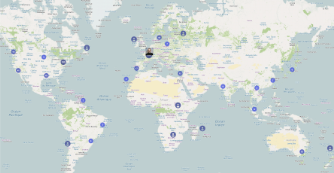
Main global connection map