Dr Ryota Kakizaki, MD, PhD is an expert in Cardiology at University Hospital of Bern (Switzerland). Ryota Kakizaki has authored 94 publications, the most recent in 2026. SLR score: 295 (community average: 125). How the SLR is computed.

LeadR Profile
Dr Ryota Kakizaki, MD, PhD University Hospital of Bern Switzerland
295 ScienceLeadR Reputation 295
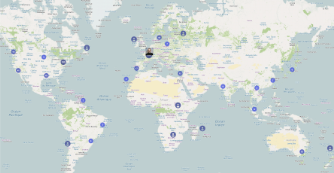
Network Map

Cardiology

Subspecialties: Medical Imaging - Informatics - Hematology

Full career – Last 3 years

Main Topics

Publications and Clinical Studies

Publications – Clinical Studies

Profile data updated on

Organizations

Career arc: 2011 - 2026
Source: PubMed

University Hospital of Bern - Research fellow

2023 - 2026

Publications Synthesis

Sources: PubMed, OpenAlex

Number : 94

Citations

Citations: 498 1st author: 17 Last author: 2 Unique author: 1


Breakdown by type

Click a legend label to hide or show it in the chart.

Latest Publications

5 most recent indexed articles

Source: Pubmed

Title Journal Year Citations
Defining silent plaque rupture healing in vivo: a structural approach by OCT.
PMID 43026654 — cardiology, rupture
Eur Heart J Top journal20260
Accuracy of CT-derived interarterial and intramural anomalous coronary arteries anatomy compared with 3D-reconstructed IVUS in-vivo reference.
PMID 42747771 — research design, bias, arteries, anatomy
Int J Cardiovasc Imaging20260
Long-term prognostic impact of optical coherence tomography detected plaque rupture in nonculprit coronary segments.
PMID 42297530 — tomography, arteriosclerosis, tomography, optical coherence, rupture
Atherosclerosis20261
Efficacy of the Shear Stress Pattern Computed in Coronary Artery Reconstruction Models With and Without Side Branches in Predicting Plaque Progression.
PMID 42131920 — ultrasonography, interventional, tomography, stress, physiological, disease progression, arteries, arteriosclerosis, vascular diseases, tomography, optical coherence, thrombosis, coronary vessels
Arterioscler Thromb Vasc Biol20260
Derivation and external validation of a deep learning model to predict changes in coronary plaque burden.
PMID 42077033 — research design, deep learning, learning
EuroIntervention20260

LeadR Networks

Main global connection map