

Yasuchika Takeishi
Prof Yasuchika Takeishi, MD, PhD, FESC, FACC, FAHA, FISHR, FAPSC, FJCS is an expert in Cardiology at Fukushima Medical University (Japan). As of November 2026, ScienceLeadR ranks Yasuchika Takeishi in the top 1% of experts worldwide for Heart Failure, and in the top 1% of experts in Japan for Cardiomyopathies and Atrial Fibrillation. Yasuchika Takeishi has authored 962 publications, the most recent in 2026, and is an investigator in 2 clinical trials. SLR score: 3,892 (community average: 125). How the SLR is computed.
LeadR Profile
Cardiology
Subspecialties: Nuclear Medicine - Biochemistry - Hematology
Main Topics
Publications and Clinical Studies
Profile data updated on
Expert Rankings
Top experts on the MeSH terms this expert works on
Short Biography
Yasuchika Takeishi is Professor and Chairman of the Department of Cardiovascular Medicine at Fukushima Medical University, where he leads patient care, research, and education. A 1987 graduate of Yamagata University School of Medicine, he subsequently held positions at the University of Cincinnati and Case Western Reserve University (1997–2000). During this time, he was trained in the NIH-sponsored Specialized Centers of Research in Heart Failure program, which pioneered the use of genetically engineered mice to elucidate mechanisms of cardiac hypertrophy and heart failure. Since 2008, Dr. Takeishi has served as Professor and Chair of the Department of Cardiovascular Medicine at Fukushima Medical University.
The global burden of heart failure has motivated Dr. Takeishi to focus on how aberrant signal transduction pathways alter cardiac size and function. Recognizing the critical role of protein kinase C in the development of cardiac hypertrophy and its progression to heart failure, he demonstrated in vitro that regulation of cellular levels of diacylglycerol (DAG) and its downstream signaling cascade by DAG kinase modulates cardiomyocyte hypertrophy. Using genetically engineered mice, he further showed that DAG kinase suppresses cardiac remodeling after pressure overload and myocardial infarction in vivo. In addition, DAG kinase prevents progressive heart failure and lethal arrhythmias in mice overexpressing constitutively active Gαq.
Pioneering studies in cellular and humoral innate immunity inspired Dr. Takeishi to investigate the roles of Toll-like receptors (TLRs) and pentraxin 3 in heart failure. He demonstrated that TLR2 modulates ventricular remodeling after myocardial infarction and doxorubicin-induced cardiotoxicity through the production of inflammatory cytokines. He also found that pentraxin 3 derived from bone marrow cells, rather than cardiac resident cells, plays a crucial role in protecting the heart against myocardial ischemia–reperfusion injury by attenuating neutrophil infiltration, the generation of reactive oxygen species, and inflammatory cytokine production.
The changing landscape of healthcare delivery has motivated Dr. Takeishi to investigate clinical biomarkers for risk stratification in patients with heart failure, leading to the identification of several novel candidate markers. In addition, he has employed molecular imaging with positron emission tomography to characterize the metabolic and inflammatory status of the failing heart. More recently, he has focused on the role of clonal hematopoiesis, a novel link between aging and cardiovascular disease. He demonstrated that clonal hematopoiesis associated with JAK2V617F causally leads to the development of pulmonary hypertension and aortic aneurysm.
Productive collaborations with mentors, colleagues, and trainees have resulted in more than 600 publications in leading journals, including Nature Communications, Journal of Clinical Investigation, Circulation, Circulation Research, Journal of the American College of Cardiology, Cardiovascular Research, and Journal of Molecular and Cellular Cardiology. Dr. Takeishi has served as Editor-in-Chief of the Journal of Cardiology, as Associate Editor of the Circulation Journal (Japanese Circulation Society), and as a member of the editorial boards of various others.
Organizations
Career arc: 1987 - 2026Fukushima Medical University
Number : 962
Citations
Best Journals
Breakdown by type
Click a legend label to hide or show it in the chart.
Latest Publications
5 most recent indexed articles
Source: Pubmed
| Title | Journal | Year | Citations |
|---|---|---|---|
| Post-traumatic stress disorder with comorbid obstructive sleep apnea after the Great East Japan Earthquake: A case report. PMID 42923492 — disasters, stress disorders, post-traumatic, sleep apnea, obstructive, sleep, stress, physiological, apnea, panic, signs and symptoms, earthquakes, stress disorders, traumatic, sleep apnea syndromes, therapeutics, wounds and injuries, sleepiness | PCN Rep | 2026 | 0 |
| Multidimensional sleep characteristics and arterial stiffness in older adults. PMID 42861034 — sleep, sleep latency, sleepiness, nocturia | Sleep Med X | 2026 | 0 |
| Acetyl-CoA synthetase 2 maintains cytosolic acetyl-CoA homeostasis to preserve mitochondrial integrity and attenuate cardiac dysfunction under chronic β-adrenergic stress. PMID 42701686 — ligases, adrenergic agents, acetyl coenzyme a, heart failure, homeostasis, heart, stress, physiological, heart failure, systolic, acetate-coa ligase | J Mol Cell Cardiol Plus | 2026 | 0 |
| Spatial Clustering and High-Frequency Characteristics of Residual Conduction in the Left Atrial Posterior Wall. PMID 42623432 — electrophysiology, atrial fibrillation, cluster analysis, catheter ablation | J Cardiovasc Electrophysiol | 2026 | 0 |
| Pathophysiological and clinical significance of hepatokine Fetuin-A and myocardial N-myristoylation in heart failure. PMID 42586752 — exercise, alpha-2-hs-glycoprotein, heart failure, heart, fetuins | Fukushima J Med Sci | 2026 | 0 |
Clinical Studies 2
Synthesis
By phase:
By status:
By type:
By Monocentric/Multicentric:
Main Topics
Cohort/Consortium Investigators 2
LeadR Networks
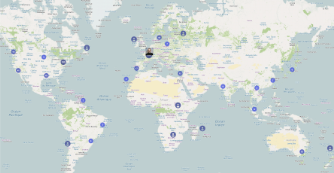
Main global connection map