

Andrew N Holding
Andrew N Holding is an expert in Biochemistry at University of York (United Kingdom). Andrew N Holding has authored 35 publications, the most recent in 2026. SLR score: 133 (community average: 125). How the SLR is computed.
LeadR Profile
Biochemistry
Subspecialties: Hematology - Genetics - Endocrinology
Main Topics
Publications and Clinical Studies
Profile data updated on
Expert Rankings
Top experts on the MeSH terms this expert works on
Organizations
Career arc: 2009 - 2026
Number : 35
Citations
Main journals
Best Journals
Breakdown by type
Click a legend label to hide or show it in the chart.
Latest Publications
5 most recent indexed articles
Source: Pubmed
| Title | Journal | Year | Citations |
|---|---|---|---|
| Aberrant splicing of MBD1 reshapes the epigenome to drive convergent myeloerythroid defects in MDS. PMID 42322117 — hematology, protein isoforms, chromatin, epigenome, therapeutics, rna splicing factors | Blood | 2026 | 2 |
| JAK2V617F reprograms Hypoxia Inducible Factor-1 to induce a non-canonical hypoxia regulon in myeloproliferative neoplasms. PMID 41629621 — oncogenes, genes, neoplasms, leukemia, hypoxia, regulon, hypoxia-inducible factor 1 | Leukemia | 2026 | 0 |
| ChIP happens: from biochemical origins to the modern omics toolbox for understanding steroid hormone receptors. PMID 41627309 — physiology, genomics, estrogens, epigenomics, androgens, chromatin, hormones, hydrocortisone, steroids | Biochem J | 2026 | 0 |
| Low-input proteomics identifies vWF as a negative regulator of Tet2 mutant hematopoietic stem cell expansion. PMID 41447537 — cells, genes, biophysics, microscopy, electron, scanning transmission, multiple chronic conditions, stem cells, proteomics, extracellular matrix, hematopoietic stem cells | Cell Rep | 2025 | 0 |
| Identification of robust RT-qPCR reference genes for studying changes in gene expression in response to hypoxia in breast cancer cell lines. PMID 39838295 — cells, genes, genomics, breast neoplasms, neoplasms, cell line, breast, hypoxia, gene expression | BMC Genomics | 2025 | 0 |
LeadR Networks
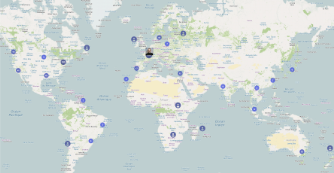
Main global connection map