

Terrance G Johns
Terrance G Johns, PhD is an expert in Oncology at University of Western Australia (Australia). As of October 2026, ScienceLeadR ranks Terrance G Johns in the top 1% of experts in Australia for Glioma. Terrance G Johns has authored 168 publications, the most recent in 2026. SLR score: 533 (community average: 125). How the SLR is computed.
LeadR Profile
Oncology
Subspecialties: Biochemistry - Neurology - Psychiatry
Main Topics
Publications and Clinical Studies
Profile data updated on
Short Biography
Prof. Terrance Johns has a PhD from Monash University and is currently the Head of Research at Epigenes Australia (Melbourne) and the Oncogenic Signalling Laboratory at Telethon Kids Institute (Perth). Most recently, Prof. Johns was a National Health and Medical Research Council Principal Research Fellow (2017-21) and Director of the Telethon Kids Cancer Centre (2018-22). He currently holds Professorships at the University of Western Australia and La Trobe University. Throughout his career, Prof. Johns has focused on brain research, including studying pathological conditions such as multiple sclerosis and cancer. He is recognised globally as a leader in novel therapeutics for treating brain cancer, with his patented discoveries advancing to phase 3 clinical trials. He continues to be actively involved in brain cancer research but more recently has applied his skills to behavioural neuroscience, looking for new treatments for mental health conditions.
Organizations
Career arc: 1990 - 2026
Number : 168
Citations
Main journals
Best Journals
Breakdown by type
Click a legend label to hide or show it in the chart.
Latest Publications
5 most recent indexed articles
Source: Pubmed
| Title | Journal | Year | Citations |
|---|---|---|---|
| DHODH is the key target of the KDM4 inhibitor QC6352 in glioblastoma stem cells. PMID 42839082 — cells, microscopy, electron, scanning transmission, neoplasms, stem cells, enzymes, glioblastoma | Nat Chem Biol | 2026 | 1 |
| Intermittent fasting rewires tissue-specific gene-transposable element regulatory networks. PMID 42553840 — genes, fasting, gene regulatory networks, muscles, liver, muscle, skeletal, tissues, dna transposable elements, intermittent fasting | PNAS Nexus | 2026 | 0 |
| Uncovering shared and tissue-specific molecular adaptations to intermittent fasting in liver, brain, and muscle. PMID 41995076 — up-regulation, fasting, muscles, biological science disciplines, cerebral cortex, brain, liver, cell biology, cholesterol, proteomics, down-regulation, tissues, fatty acids, intermittent fasting | Elife | 2026 | 0 |
| Histone methyltransferase PRDM9 promotes survival of drug-tolerant persister cells in glioblastoma. PMID 41397959 — cells, methyltransferases, biological science disciplines, pharmaceutical preparations, neoplasms, drug therapy, cholesterol, histones, glioblastoma, therapeutics, histone methyltransferases, chemotherapy | Nat Commun | 2025 | 0 |
| Pharmacological targeting and characterization of Voltage-Gated Sodium Channels (VGSCs) expressed in the high-grade glioma microenvironment. PMID 41331425 — glioma, voltage-gated sodium channels, neoplasms, sodium channels | BMC Cancer | 2025 | 0 |
LeadR Networks
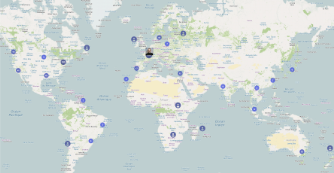
Main global connection map