

Frank Porreca
Frank Porreca is an expert in Biochemistry at Mayo Clinic (United States, Scottsdale) (United States). As of September 2026, ScienceLeadR ranks Frank Porreca in the top 1% of experts worldwide for Pain and Headache. Frank Porreca has authored 695 publications, the most recent in 2026, and is an investigator in 4 clinical trials. SLR score: 3,269 (community average: 125). How the SLR is computed.
LeadR Profile
Biochemistry
Subspecialties: Neurology
Main Topics
Publications and Clinical Studies
Profile data updated on
Expert Rankings
Top experts on the MeSH terms this expert works on
Organizations
Career arc: 1987 - 2026
Number : 695
Citations
Main journals
Best Journals
Breakdown by type
Click a legend label to hide or show it in the chart.
Latest Publications
5 most recent indexed articles
Source: Pubmed
| Title | Journal | Year | Citations |
|---|---|---|---|
| Clinical and preclinical investigation of the mechanism promoting aura in post-traumatic headache and inhibition of pain-related behavior in mice by onabotulinumtoxinA. PMID 42775980 — headache, pain, migraine disorders, post-traumatic headache, optogenetics | Pain | 2026 | 0 |
| Identification of a central CGRP circuit for trigeminal V1-mediated migraine-like pain in mice. PMID 42339700 — headache, cells, genes, pituitary adenylate cyclase-activating polypeptide, central amygdaloid nucleus, neurons, pain, acute pain, migraine disorders, parabrachial nucleus, photophobia, trigeminal nerve, neurology | Brain | 2026 | 1 |
| Sexually dimorphic mediation of experimental post-traumatic headache by orexin receptor signaling. PMID 42302125 — headache, pain, sleep, stress, physiological, migraine disorders, orexin receptors, post-traumatic headache, negotiating, orexins | Pain | 2026 | 0 |
| Dual Roles of Voltage-gated Calcium Channels and γ-Aminobutyric Acid-mediated Signaling in Modulating Neurotensin Receptor Type 2-induced Antinociception. PMID 42262386 — clustered regularly interspaced short palindromic repeats, chronic pain, anesthesiology, neurons, pain, receptors, neurotensin, analgesia, calcium channels, calcium, therapeutics, neurotensin, spine | Anesthesiology | 2026 | 0 |
| Sex-dependent central amygdala physiology after supradural CGRP exposure is associated with migraine-like behaviors. PMID 42251283 — headache, cells, calcitonin gene-related peptide receptor antagonists, physiology, central amygdaloid nucleus, hypersensitivity, migraine disorders, amygdala, sex | J Headache Pain | 2026 | 0 |
Clinical Studies 4
Synthesis
By phase:
By status:
By type:
By Monocentric/Multicentric:
Main Topics
LeadR Networks
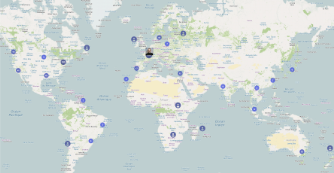
Main global connection map